Keonn
Advansafe 300
Overhead RFID loss prevention with beam steering and mmWave sensing
Overview
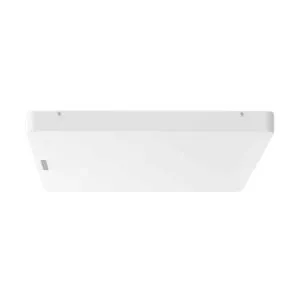
An overhead loss-prevention system that leaves the entrance clear of pedestals. It combines RFID beam steering with a millimetre-wave sensor to tell moving tags from static ones and to confirm a person actually crossed the threshold, which is what keeps false alarms down. It also records direction of travel, so alarms only fire on the way out.
Technical specifications
| Operating frequency | FCC 902-928 MHz; ETSI 865.6-867.6 MHz; Chile and Peru 916-928 MHz by channel selection; 14 regional plans |
|---|---|
| Detection height | 2.5-3 m recommended, 3.5 m maximum |
| Radiation pattern | Multiple beam (beam steering) |
| Beam width | 90 deg / 40 deg |
| Polarisation | Circular |
| Reader power | Maximum 31.5 dBm; 30 dBm recommended |
| Radiated power | 2 W ERP, 3.2 W EIRP |
| Transponder protocol | EPC Class 1 Gen2 / Gen2X |
| EAS verification | NXP EAS bit, Impinj Gen2X Protected Mode, or EPC pattern matching |
| Alarm | LED light and buzzer; dry contact relay output 24 VDC / 0.5 A resistive |
| Interface | Ethernet and USB |
| Operating system | Linux |
| Power supply | Power over Ethernet |
| Energy consumption | Under 14 W max, under 3 W idle |
| Temperature range | -20 °C to +55 °C |
| Dimensions | 482 x 482 x 78 mm suspension; 482 x 482 x 92 mm ceiling or flush |
| Weight | Primary 3.7-4.8 kg, secondary 3.4-4.5 kg depending on mount |
| Housing | Co-extruded ABS acrylic, off white |
Specifications published by Keonn.
Common uses
- Store entrance loss prevention
- Shrinkage analytics by product
- Exit direction detection
- Multi-door installations from one primary unit
Use case: Store exit without pedestals
How this product is typically deployed, step by step.
Talk to our Miami team
We size the deployment, supply the tags and hardware, integrate with your ERP or WMS and support it afterwards.